Bedminster office
Fishponds office
Kingswood office

Domestic Abuse Conference Bristol 2026 Brings Professionals Together for a Fifth Year
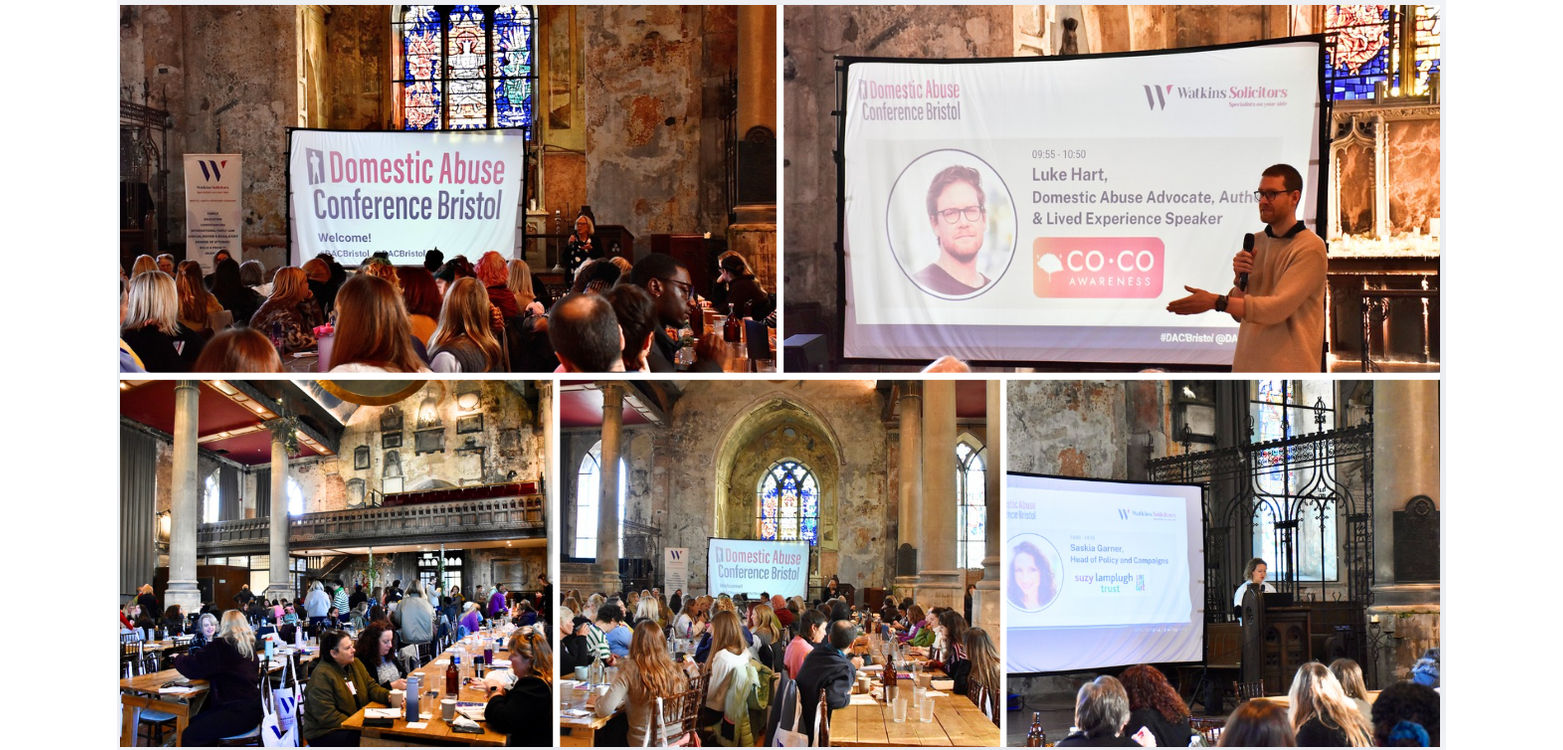
Watkins Solicitors welcomed professionals from across Bristol and beyond to its fifth annual Domestic Abuse Conference on Thursday 12 November 2026, bringing together research, specialist knowledge and lived experience to explore some of the most pressing challenges in recognising and responding to domestic abuse.
Held at The Mount Without in Bristol, the not-for-profit conference brought together professionals working across law, domestic abuse support services, safeguarding, policing, healthcare, housing, local authorities and charities.
This year's programme examined the far-reaching effects of domestic abuse, from the lasting impact of coercive control on mental health to the dangers of stalking, child-to-parent abuse, financial harm and housing insecurity.
A recurring theme throughout the day was the importance of recognising patterns of abuse, listening to those affected and ensuring that the systems intended to protect people do not create further difficulties.
Domestic Abuse Legal Developments in 2026
The conference opened with Beverley Watkins, Managing Partner of Watkins Solicitors, who provided an update on significant legal developments affecting domestic abuse cases in England and Wales.
Beverley discussed the revised guidance on non-molestation orders, which came into effect in January 2026, and the importance of understanding coercive control, psychological abuse and economic abuse when considering applications for urgent protection.
She also explored changes to Practice Direction 12J in private law children proceedings, including the need for courts to consider patterns of abusive behaviour and assess risks to children and parents when making decisions about contact.
Other developments included the forthcoming national rollout of Domestic Abuse Protection Orders from 25 November 2026 and proposed legislative changes concerning the presumption of parental involvement in children's proceedings.
These developments reflect the continued focus on improving legal protection and ensuring that domestic abuse, particularly coercive and controlling behaviour, is properly recognised within family court proceedings.
For solicitors, safeguarding professionals and support services, the session provided an opportunity to consider how changing legal guidance and practice may affect the advice and protection available to those experiencing abuse.
Lived Experience and Understanding Coercive Control
Luke Hart, domestic abuse advocate, author and international speaker, brought an important lived experience perspective to the conference.
Drawing on his family's experiences of coercive control and domestic homicide, Luke has dedicated his work to improving professional understanding of domestic abuse and its devastating impact on families.
His contribution reinforced the importance of looking beyond individual incidents and recognising the wider patterns of control, fear and manipulation that can exist within abusive relationships.
Coercive Control, Mental Health and What Recovery Really Means
Professor Sian Oram, Professor of Trauma and Recovery at King's College London, delivered a research-led presentation exploring coercive control, mental health and the conditions needed for survivors to heal.
Her presentation highlighted how the effects of domestic abuse can continue long after a relationship has ended. Survivors may experience depression, anxiety, post-traumatic stress disorder and other difficulties, particularly where abuse, financial insecurity or housing instability continues following separation.
Professor Oram also highlighted significant gaps in access to mental health support.
Research from a Domestic Abuse Commissioner's survey, referenced during her presentation, found that 88% of respondents wanted counselling or therapeutic support, yet only 45% of those who wanted it had been able to access it.
Similarly, 77% wanted mental healthcare, but only 37% of those seeking it had been able to access that support.
These findings demonstrate the challenges many survivors face in obtaining the help they need.
One of the most interesting aspects of Professor Oram's presentation was her research into what wellbeing and recovery actually mean to survivors.
Rather than defining recovery simply as the absence of mental health symptoms, her research explored the importance of rebuilding confidence, independence, identity, supportive relationships, personal choice and hope for the future.
The research also considered how professional and justice system responses can affect recovery.
Survivors may face repeated disclosures, lengthy legal proceedings, uncertainty and difficulties navigating different services. Being believed, having safety concerns taken seriously and receiving clear information and consistent support can make a meaningful difference.
The presentation encouraged professionals to think beyond immediate crisis intervention and consider how their services can better support survivors' longer-term wellbeing.
Recognising Child-to-Parent Abuse and Supporting Families
Michelle John MBE, Founding Director of PEGS (Parental Education Growth Support), delivered a presentation focusing on child-to-parent abuse and the challenges faced by parents, carers and families seeking help.
Drawing on her own lived experience and the work of PEGS, Michelle explored how abusive behaviour towards parents can be misunderstood, minimised or dismissed as challenging behaviour or poor parenting.
Her presentation challenged assumptions about age, intent and responsibility, highlighting the importance of recognising the harm experienced by parents and carers and responding appropriately.
Michelle also addressed the difficulties caused by inconsistent recognition and recording of child-to-parent abuse, which can make it harder to understand the scale of the problem and develop effective support.
A practical message from her session was the importance of four approaches to supporting affected families:
Recognise: Identify signs of abuse and take parental distress seriously.
Respond: Listen to disclosures without judgement or blame.
Refer: Work collaboratively with safeguarding services, schools, police, healthcare and other relevant agencies.
Reframe: Recognise child-to-parent abuse as a safeguarding concern rather than simply a parenting or behavioural issue.
The session highlighted the importance of ensuring that parents and carers are heard, supported and able to access appropriate help.
Stalking, Risk and the Professional Response
Saskia Garner, Head of Policy and Campaigns at the Suzy Lamplugh Trust, explored stalking, the risks faced by victims and the need for more effective professional responses.
Her presentation emphasised that stalking is not simply a series of unwanted contacts or isolated incidents. It can involve persistent, obsessive and intrusive behaviour that causes fear, distress and significant disruption to victims' lives.
The scale of the issue was illustrated through research presented by the Trust, which estimated approximately 1.4 million stalking cases in the year ending March 2025, with only around 9% reported.
Saskia also highlighted the impact stalking can have beyond the individual victim, including on children, family members, friends and colleagues.
The presentation examined gaps in professional recognition, risk assessment, training and safeguarding, including findings from research into the healthcare response to stalking.
One particularly concerning finding presented was that only 17% of healthcare professionals surveyed felt very confident in their ability to identify a patient who may be experiencing stalking.
Saskia discussed the need for earlier recognition of warning signs, specialist training and improved collaboration between police, healthcare professionals and stalking support services.
The work of Multi-Agency Stalking Intervention Programmes was also explored, demonstrating how coordinated responses can support victims while addressing perpetrator behaviour and risk.
The session reinforced the importance of treating stalking as a serious safeguarding concern and ensuring that professionals recognise patterns of behaviour before risks escalate.
Domestic Abuse, Financial Harm and Housing: The Panel Discussion
The final session brought together Dr Mercy Denedo, Associate Professor at Durham University Business School, Dr Kelly Henderson, Founder and Co-Managing Director of Addressing Domestic Abuse, and Luke Hart, domestic abuse advocate and lived experience speaker, for a panel discussion moderated by Beverley Watkins.
Bringing together academic research, specialist housing practice and lived experience, the discussion explored the complex connections between domestic abuse, financial harm, gambling-related harms and housing insecurity, and what professionals may be overlooking when supporting those affected.
An important theme was the need to recognise how different forms of abuse intersect. Financial abuse, debt and gambling-related harms can have significant consequences for someone's housing security, affecting their ability to remain in their home, access alternative accommodation or rebuild their independence. These difficulties may continue long after an abusive relationship has ended.
The panel also considered how housing services respond to domestic abuse, including the assumption that the person experiencing abuse should be the one to leave their home. Discussions explored the importance of meaningful housing choices, addressing perpetrator behaviour and ensuring that survivors are not unnecessarily displaced from their homes, communities and support networks.
Drawing on lived experience, the conversation also examined the dangers of treating domestic abuse as a series of isolated incidents rather than recognising wider patterns of coercive control. Particular attention was given to the risks surrounding separation and why leaving an abusive relationship does not necessarily mean someone is safe.
Another important area was the role of professionals and the questions they should be asking when someone presents with financial difficulties, housing problems or other circumstances that may be connected to domestic abuse.
The discussion considered how housing providers, solicitors, police, domestic abuse services and other agencies can work more effectively together, recognising that individuals often face overlapping challenges that cannot be addressed by one service alone.
The session encouraged attendees to reflect on their own professional practice, consider what they may currently be missing and identify practical changes that could improve safety, housing security and longer-term outcomes for those experiencing domestic abuse.
Fantastic Feedback from Delegates
Feedback following the conference was overwhelmingly positive, with attendees particularly valuing the range of subjects covered, the quality of the speakers and the combination of research, specialist professional knowledge and lived experience.
It was especially encouraging to hear from returning delegates who have attended over several years.
One attendee described the conference as:
"Since inception, my go to DA conference of the year. The best!"
They added:
"Keep doing what you are doing. This event gets better and better and builds annually on previous years' success."
Other attendees praised the programme and the variety of perspectives:
"As always, keynote speaker was exceptional. Great range of topics and very thought provoking. Well done!"
"An excellent selection of speakers for a thoroughly thought provoking day."
The contributions from speakers with lived experience were particularly valued.
As one attendee explained:
"The speakers with lived experience were very powerful. Lots to take on board."
Importantly, feedback also highlighted the practical value of the conference for those working directly with individuals and families affected by domestic abuse.
One delegate described the event as:
"Well thought out and really beneficial to my work."
The same attendee, who works as an Independent Domestic Violence Adviser (IDVA), added:
"Will use this in my day to day work as an IDVA."
Other comments included:
"Another great conference. Thank you for bringing everyone together."
"Incredible speakers and brilliantly organised!"
The feedback reflects the value of bringing together professionals from different services, providing opportunities to learn from each other's experiences and take useful knowledge back into their own work.
The Importance of Working Together
One of the strongest messages from this year's conference was that responding effectively to domestic abuse requires more than the work of any single organisation.
Someone experiencing abuse may need assistance with legal protection, housing, finances, children's welfare, safeguarding and mental health, often at the same time.
The presentations highlighted how fragmented services, difficulties accessing specialist support and a failure to recognise patterns of abuse can create additional challenges for those seeking help.
They also demonstrated the difference that informed, compassionate and coordinated professional responses can make.
By bringing together solicitors, charities, domestic abuse specialists, healthcare professionals, housing providers and other organisations, the conference provides an opportunity to share knowledge, strengthen existing relationships and build connections that can support future collaboration.
Five Years of Domestic Abuse Conference Bristol
Now in its fifth year, Domestic Abuse Conference Bristol continues to provide an opportunity for professionals working across different sectors to learn, share experiences and develop their understanding of domestic abuse.
The event is organised by Watkins Solicitors on a completely not-for-profit basis, helping to make specialist learning and professional connections accessible to charities, frontline services and other organisations.
We would like to thank all our speakers for sharing their expertise, research and experiences, and everyone who attended and contributed to the discussions throughout the day.
Our thanks also go to the Watkins team and everyone involved in organising and supporting the conference.
We are particularly grateful to those who continue to return year after year, alongside the many professionals attending for the first time.
We look forward to continuing these conversations and bringing professionals together again in the future.
Supporting People Affected by Domestic Abuse
At Watkins Solicitors, we understand how difficult it can be to seek legal advice when experiencing domestic abuse, particularly where there are concerns about personal safety, children or the future.
As a multi-award-winning law firm, we have been supporting individuals and families since 1998, providing specialist legal advice with compassion, sensitivity and understanding.
Our commitment to supporting vulnerable individuals and families has been recognised nationally and regionally. In 2025, Watkins Solicitors was named Regional Law Firm of the Year at the Bristol Law Society Awards, while our Managing Partner, Beverley Watkins, received the Legal Aid Lawyer of the Year Award for Family Legal Aid, including Children's Rights.
Our specialist Family Law team provides confidential legal advice and representation to people experiencing domestic abuse, including assistance with:
Non-molestation orders and occupation orders to help protect individuals and their families.
Legal advice concerning children, including child arrangements and safeguarding concerns.
Divorce, separation and other family law matters involving domestic abuse.
Understanding legal rights, available protections and the steps that can be taken to move forward safely.
Legal Aid may be available, depending on individual circumstances and eligibility. Our team can explain the funding options available and help you understand the next steps.
If you or someone you know is experiencing domestic abuse and needs legal advice, our experienced team is here to listen and help.
Contact our Family Law team:
Telephone: 0117 939 0350
Email: info@watkinssolicitors.co.uk
Find out more: Domestic Abuse Legal Advice
All enquiries are treated with sensitivity and confidentiality.